Understanding the World Cup Fixtures: Your Guide to the Tournament Structure
The FIFA World Cup is the pinnacle of international football, captivating billions of fans across the globe. For English-speaking fans and those learning the language, navigating the World Cup fixtures in English is an essential skill to fully immerse in the excitement. The tournament's schedule is a meticulously planned roadmap, starting from the group stage draw and culminating in the grand final. Each phase has its own unique terminology and format, which, when understood, significantly enhances the viewing experience and allows for deeper engagement with global commentary and analysis.
Decoding the Fixture List: Key Terms and Phases
To effectively follow the global drama, one must first become fluent in the language of the fixture list. The tournament is divided into distinct stages, each announced and detailed in official World Cup schedules.
The Group Stage: The Opening Act
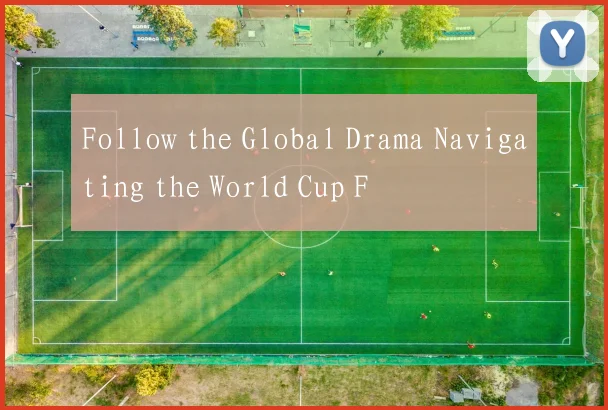
This initial phase sees the qualified nations divided into several groups, typically labeled Group A through Group H. Each team plays every other team in its group once. The fixtures here are often listed as "Matchday 1," "Matchday 2," and "Matchday 3." Understanding terms like "group standings," "points" (a win earns 3 points, a draw 1 point), "goal difference," and "head-to-head record" is crucial for predicting which two teams from each group will advance to the knockout rounds.
The Knockout Stages: Where Legends Are Made
After the group stage, the competition intensifies with single-elimination matches. The terminology becomes more dramatic and precise:
- Round of 16: This is the first knockout round, featuring the top two teams from each group.
- Quarter-finals: Often abbreviated as "the quarters," this stage features the eight victorious teams from the Round of 16.
- Semi-finals: The "semis" determine the two finalists.
- Third-Place Play-off: A match between the two losing semi-finalists to decide the bronze medal.
- The Final: The ultimate match to crown the world champion.
Fixtures in this stage are defined by their specific bracket positions, such as "Winner of Match 49 vs. Winner of Match 50," which adds to the strategic narrative of the tournament path.

Where to Find and Follow the English-Language Schedule
Accessing accurate and up-to-date World Cup fixtures in English is straightforward with today's digital resources. The primary source is always the official FIFA website (FIFA.com), which provides the complete schedule, venue information, kick-off times in multiple time zones, and real-time results. Major international sports news outlets like ESPN, BBC Sport, and The Guardian offer comprehensive fixture lists integrated with previews, expert commentary, and statistical analysis. For mobile users, dedicated sports apps allow you to personalize notifications for specific teams or matches, ensuring you never miss a key moment in the global drama.
When reading the schedule, pay close attention to the venue (the city and stadium name) and the local kick-off time, which is often converted to your local time zone (ET, GMT, PST, etc.). Phrases like "kick-off," "FT" (Full Time), "HT" (Half Time), and "AET" (After Extra Time) are standard abbreviations you will encounter.
Enhancing Your Experience: Language Tips for Fans
Following the World Cup fixtures is more than just noting dates and times; it's about engaging with the story of the tournament. Here’s how to deepen that experience through English:
- Listen to English Commentary: Whether watching on TV or streaming online, choose an English-language broadcast. Commentators use a rich vocabulary to describe play, tactics, and emotions, from "a clinical finish" to "a resolute defense" and "a stunning upset."
- Read Pre-Match and Post-Match Analysis: Articles and opinion pieces will discuss "tactical setups," "key player matchups," "injury concerns," and "form guides." This exposes you to more specialized football terminology.
- Participate in Online Discussions: Engage with fan communities on social media platforms or forums like Reddit. You'll see common phrases like "must-win game," "group of death," "park the bus," and "a game of two halves" used in natural context.
- Follow Team and Player Narratives: The fixture list creates compelling stories—rematches of historic rivalries, underdogs facing giants, or a star player returning to their country of birth. Understanding these narratives in English adds a rich layer to the tournament's global drama.
Planning Your Viewing: A Practical Approach
With matches often occurring in different time zones, planning is essential for dedicated fans. Once you have the English-language World Cup schedule, create a personal calendar. Identify the "can't-miss" fixtures for your favorite team or the most tantalizing group-stage clashes. Mark the high-stakes knockout matches well in advance. Many websites provide printable bracket charts that you can fill in as the tournament progresses, a practice commonly known as "filling out your bracket," which is a popular activity in offices and among friend groups, especially in North America.
This practical engagement turns the abstract fixture list into a personal journey through the tournament. You are not just a passive viewer but an active participant tracking the progress, witnessing the surprises, and ultimately, following the global drama unfold exactly as the schedule dictates, yet always with unpredictable and breathtaking moments.
The Cultural Unifier: Beyond the Schedule
Ultimately, the World Cup fixtures represent more than a series of games; they are a universal calendar of shared human experience. The ability to navigate them in English opens doors to a wider community of fans. It allows you to understand the punditry on international broadcasts, debate decisions with a broader audience, and appreciate the universal language of football that the World Cup exemplifies. Every match on that schedule is a chapter in a story that captivates the world, and by mastering the vocabulary and structure of the tournament, you ensure you don't just watch the story—you understand and become part of it.